

IPC Personal Goals
The IPC promotes eight personal goals that underpin all learning at Savannah:
Resilient, Adaptable, Communicator, Thinker, Ethical, Collaborator, Respectful, Empathetic.
These values are woven through our daily school life, guiding how we learn, work, and interact. By consistently reinforcing them, we help children grow into compassionate, responsible, and confident individuals.
Early Years (Pre-Reception & Reception)
At Savannah International School, our Early Years section includes Pre-Reception and Reception.
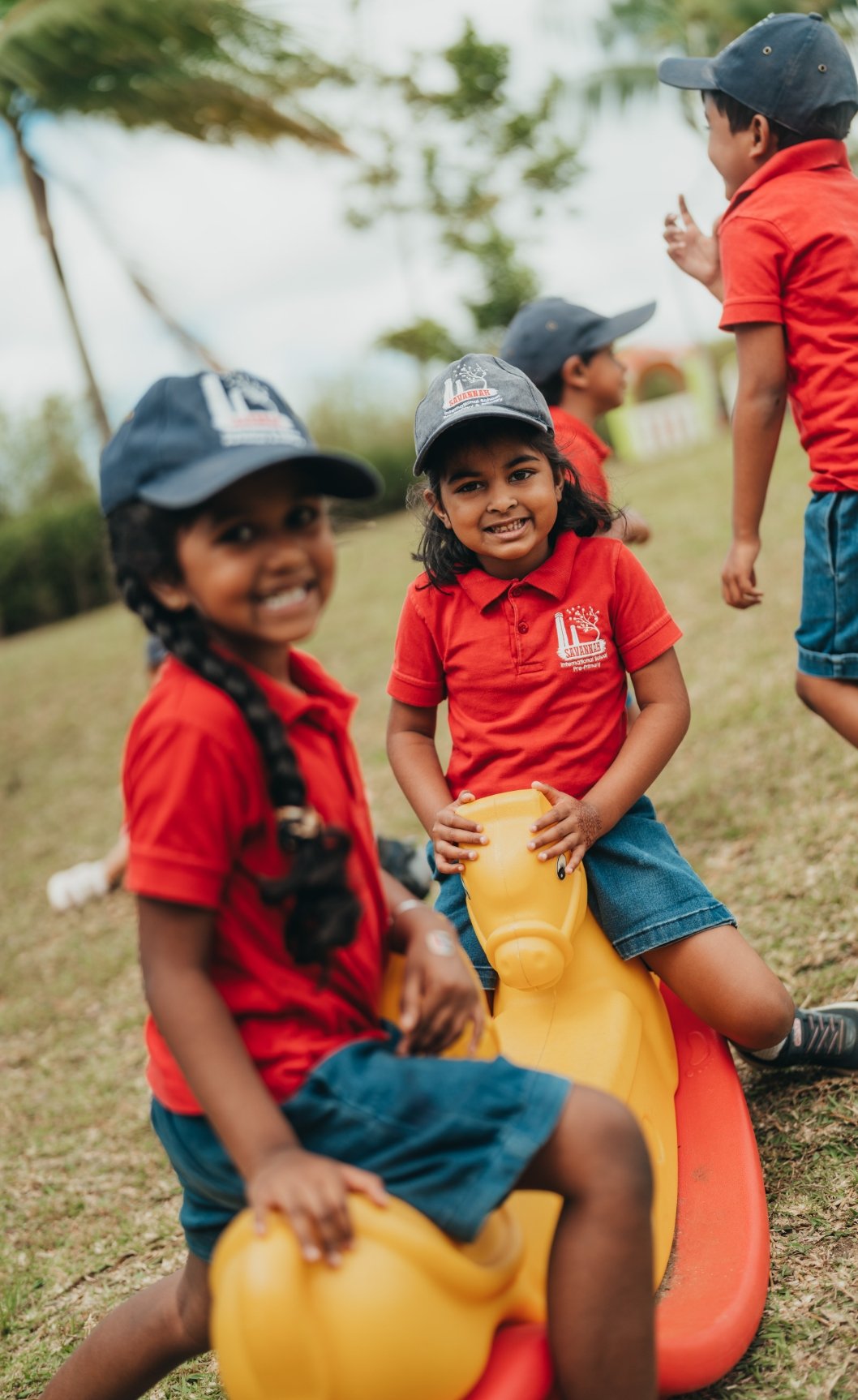
We believe this stage is a vital foundation for every child’s future learning. Our approach is play-based, hands-on, and designed to nurture curiosity, confidence, and independence through meaningful, engaging experiences.
Independence and Interdependence – developing social confidence, emotional awareness, and the ability to work and play with others.
Communicating – building early literacy, language, and creative expression through stories, art, music, movement, and play.
Enquiring – fostering curiosity, questioning, and problem-solving as children make sense of the world around them. Healthy Living and Physical
Well-being – encouraging coordination, confidence, and a positive attitude toward health and self-care.
Together, these strands provide a well-rounded foundation for intellectual, social, and physical development, preparing our youngest learners for a lifelong love of learning.
Jolly Phonics
Building Early Literacy Skills
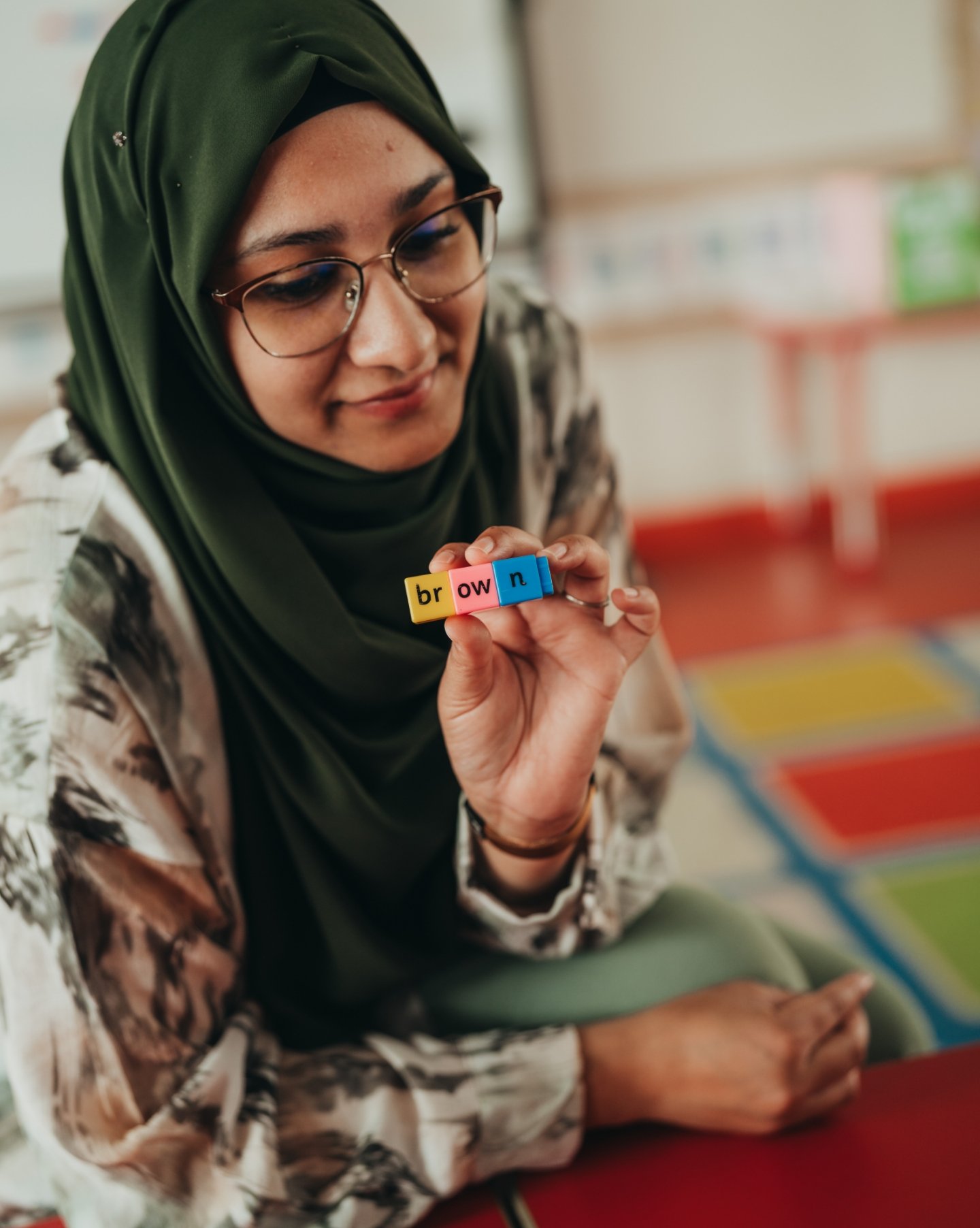
At Savannah, we use Jolly Phonics, a fun and interactive programme that builds strong foundations in reading and writing. Through stories, songs, actions, and visuals, children learn the 42 main sounds of the English language — from simple sounds like /s/ or /t/ to digraphs such as “sh” and “ai.”
In Pre-Reception, children begin by recognising and saying sounds accurately. In Reception, they start to blend sounds to read words (e.g., c-a-t → cat) and segment them to spell. Along the way, they practise letter formation and develop fine motor skills through engaging, hands-on writing activities.
This multi-sensory approach makes early literacy learning joyful, memorable, and effective.
For more information on Jolly Phonics: https://www.jollylearning.co.uk/jolly-phonics
Numicon Firm Foundations
Developing Early Mathematical Thinking
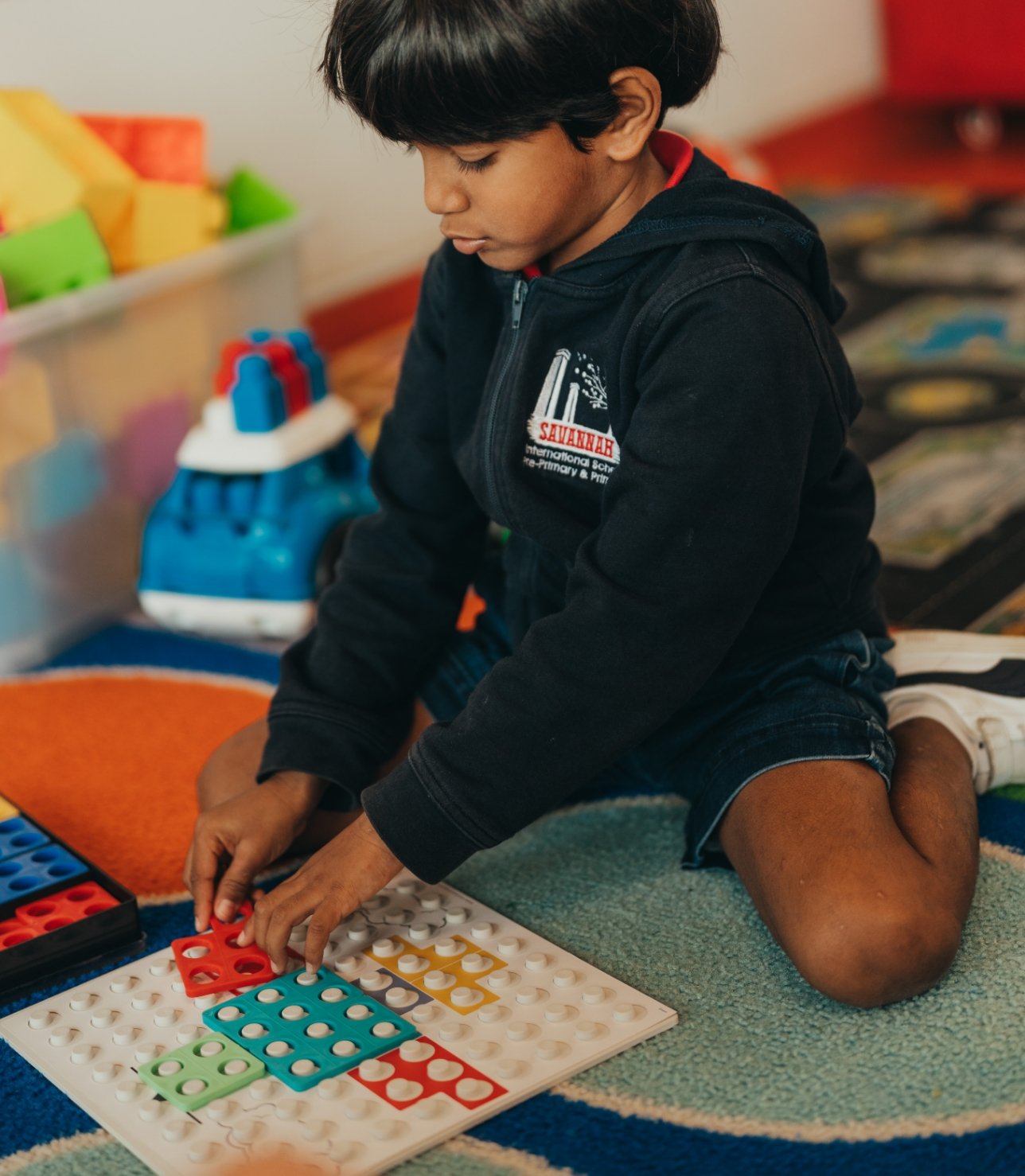
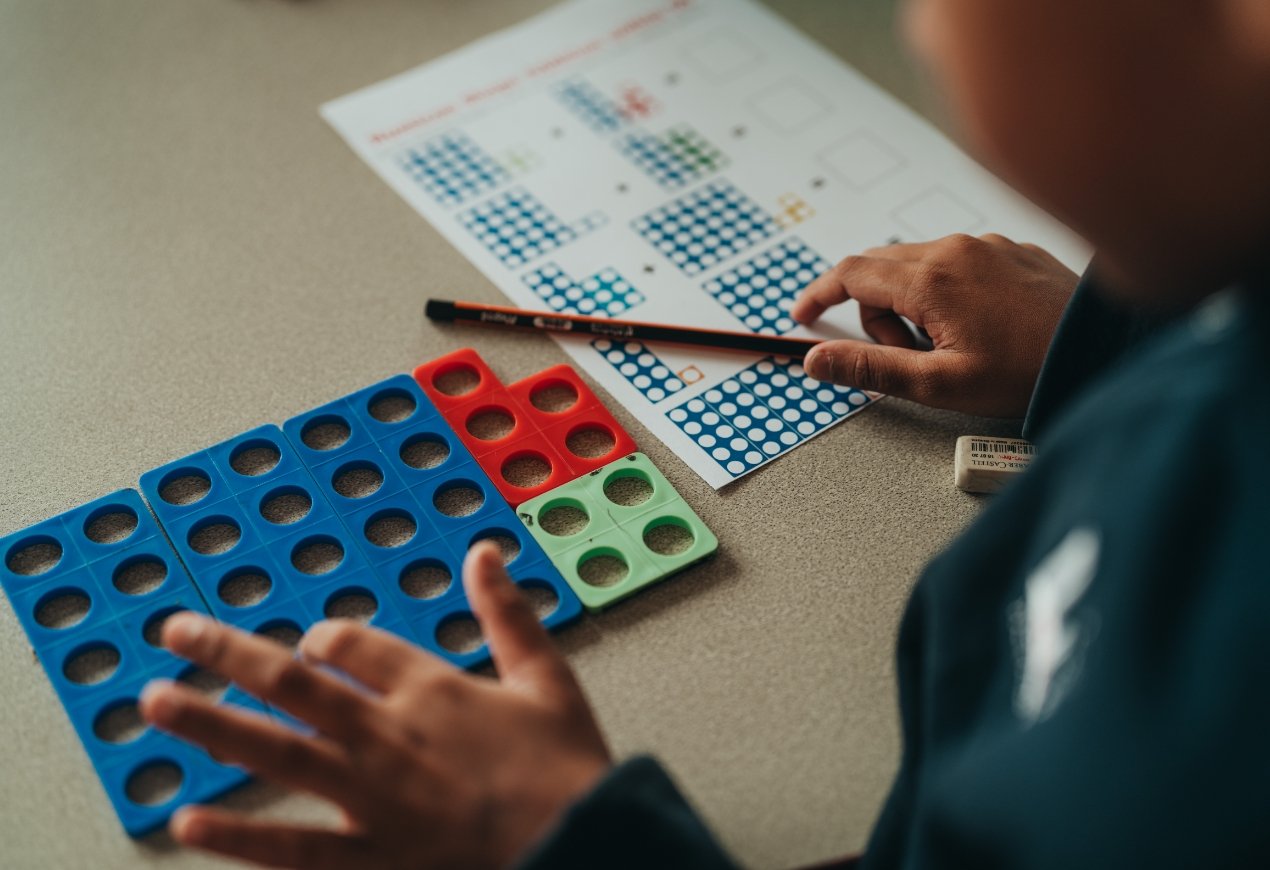
Our Early Years maths programme, Numicon Firm Foundations, helps children develop strong number sense through play-based, tactile learning. Using colourful Numicon shapes that represent numbers from 1 to 10, children explore number concepts by touching, seeing, and arranging pieces in meaningful ways.
In Pre-Reception, they build familiarity with shapes through free play and exploration. In Reception, they use them purposefully to count, compare, and represent numbers, developing understanding of quantity, order, and part-whole relationships — key skills for early addition and subtraction.
Through these playful, hands-on experiences, children build confidence, curiosity, and a deep understanding of mathematical ideas.
For more information on Numicon: https://learningmole.com/numicon-a-guide

Primary (Years 1–6)
International Primary Curriculum (IPC)
Developing Knowledge, Skills and Understanding Through Meaningful Learning
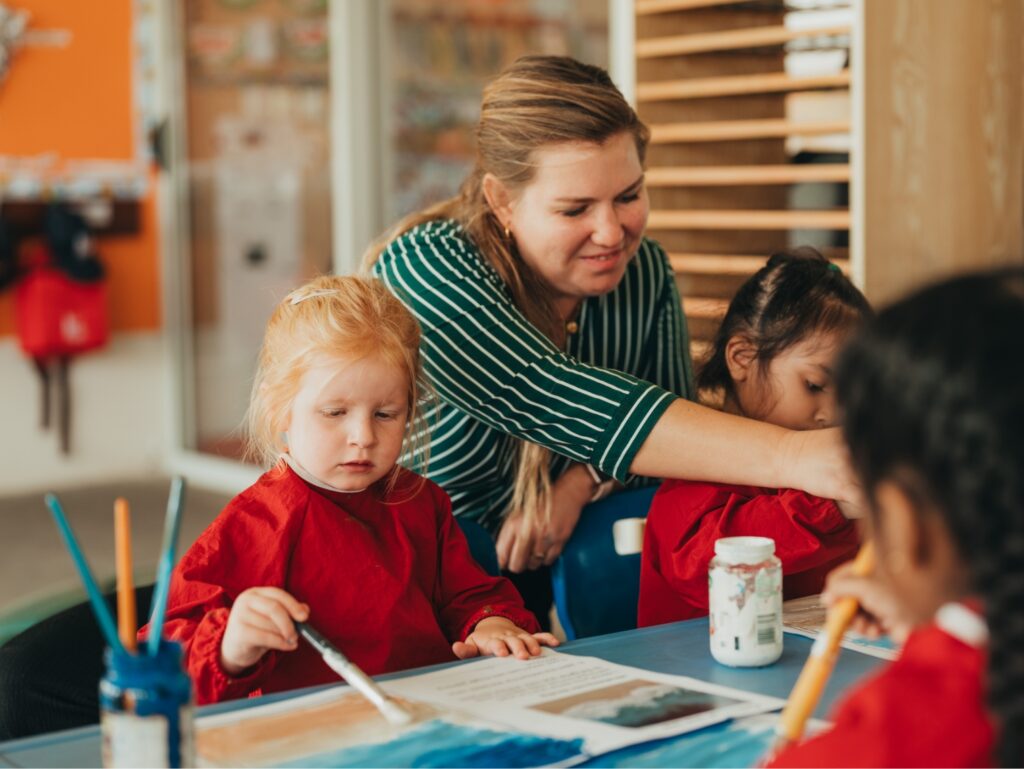
In the Primary Section, students follow the International Primary Curriculum (IPC) a globally recognised programme that supports both academic and personal growth.
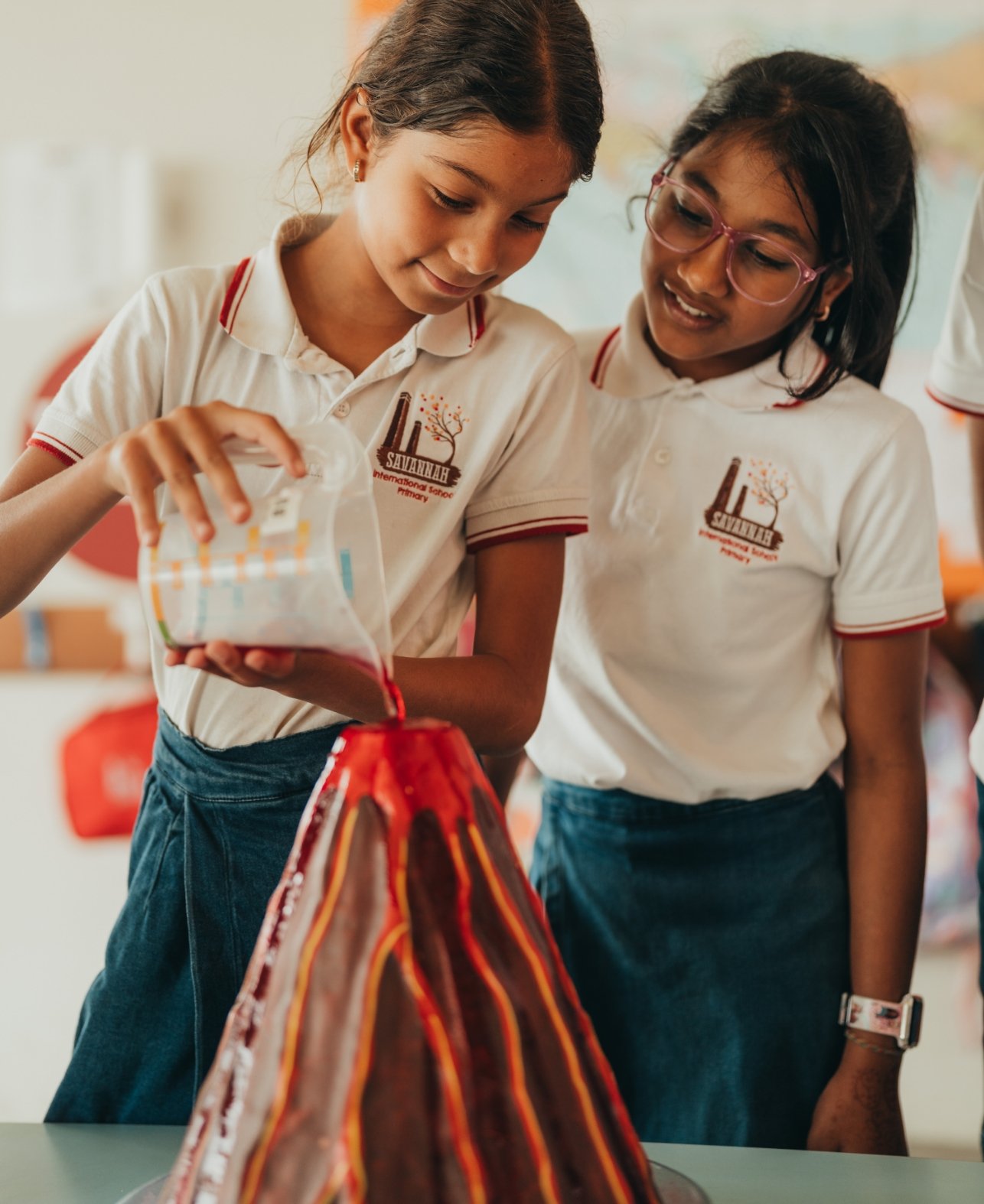
Learning takes place through engaging, thematic units that make meaningful connections across subjects such as Science, History, Geography, Health & Well-being, Design, Technology and Innovation, International, Art, Music, and Physical Education.
Children explore rich topics like We Are What We Eat, Hooray! Let’s Go on Holiday, or Space Explorers, encouraging curiosity, creativity, and critical thinking. As they progress, the units become more complex and globally relevant, helping them develop a deeper understanding of themselves and the world.
Literacy - Developing Confident Readers, Writers and Communicators
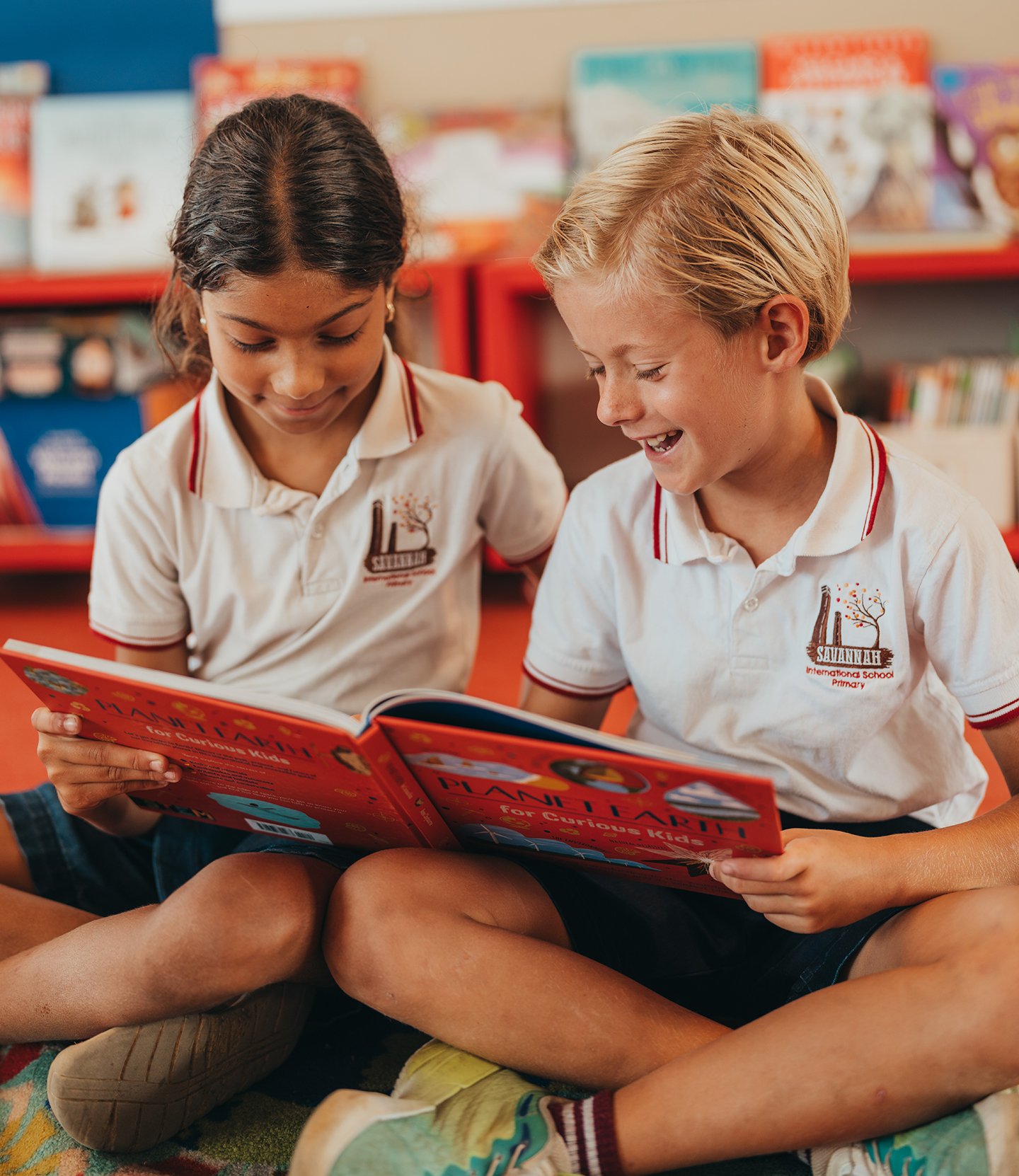
Our literacy programme combines phonics, grammar, reading, and writing instruction to help children move from learning to read to reading to learn.
Jolly Phonics
Laying the Foundations
In Grades 1 and 2, students begin with Jolly Phonics, a lively, multi-sensory programme introducing the 42 main letter sounds of English.
Through songs, stories, and actions, children learn to blend and segment sounds, form letters, and recognise tricky words — building confidence as early readers and writers.

Jolly Grammar
Deepening Understanding
From Grade 1 to Grade 6, children continue with Jolly Grammar, exploring the structure and rules of language — including parts of speech, punctuation, verb tenses, and spelling patterns. Lessons are active and engaging, helping children communicate with accuracy, creativity, and clarity.
Together, Jolly Phonics and Jolly Grammar create a consistent framework for literacy development across the primary years.
French Literacy
Building Bilingual Foundations
French is taught as a core literacy subject from the start of primary school. In Year 1, students are introduced to early French reading through La Planète des Alphas — a story-based, phonics programme that makes learning sounds and letters fun and memorable.
From Grade 2 to Grade 6, students follow a curriculum inspired by the French National Curriculum, adapted for our international setting. Lessons focus on reading fluency, grammar, vocabulary, and writing for different purposes, while also developing oral confidence through speaking and listening activities.
Our inclusive approach supports both native and non-native speakers, nurturing a love for the French language and francophone culture.
Numeracy
Making Mathematics Visual, Meaningful and Engaging
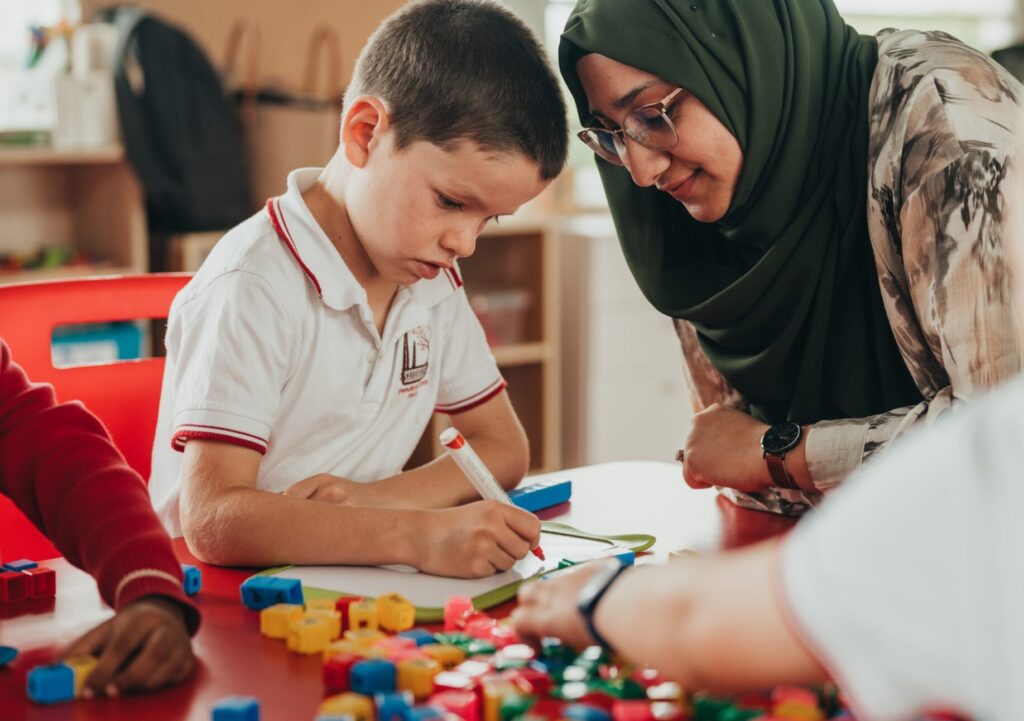
At Savannah, mathematics is taught through the Numicon approach — a visual, hands-on programme that makes abstract ideas concrete and accessible. Using colourful Numicon shapes, number rods, and patterns, students explore number relationships, develop fluency, and build reasoning and problem-solving skills.
The programme encourages a concrete–pictorial–abstract progression, ensuring deep conceptual understanding before moving on to formal written methods. Numicon is used across all grades to ensure consistency, confidence, and a love of mathematical thinking.


Assessment and Reporting
Supporting Every Learner Through Thoughtful, Ongoing Assessment
Assessment at Savannah is designed to support learning rather than simply measure it. Teachers use a range of informal methods — including observations, checklists, projects, and discussions — to understand each child’s progress and tailor instruction accordingly.
Formal tests are avoided in the early years of primary. Instead, children share their learning through IPC Exit Points, where they showcase their knowledge through performances, projects, and creative displays — often shared with parents.
This approach ensures assessment remains positive, purposeful, and child-centred.
Download the full Primary Curriculum
Inclusive Learning
At Savannah International School, we recognise that every child learns in their own way and at their own pace.
Differentiation is at the heart of our teaching practice, ensuring that all students are both supported and challenged to achieve their personal best. Our teachers design lessons that are flexible and responsive to individual needs. This may mean presenting material in different ways, offering varied levels of support, or encouraging students to demonstrate their understanding through a range of activities.
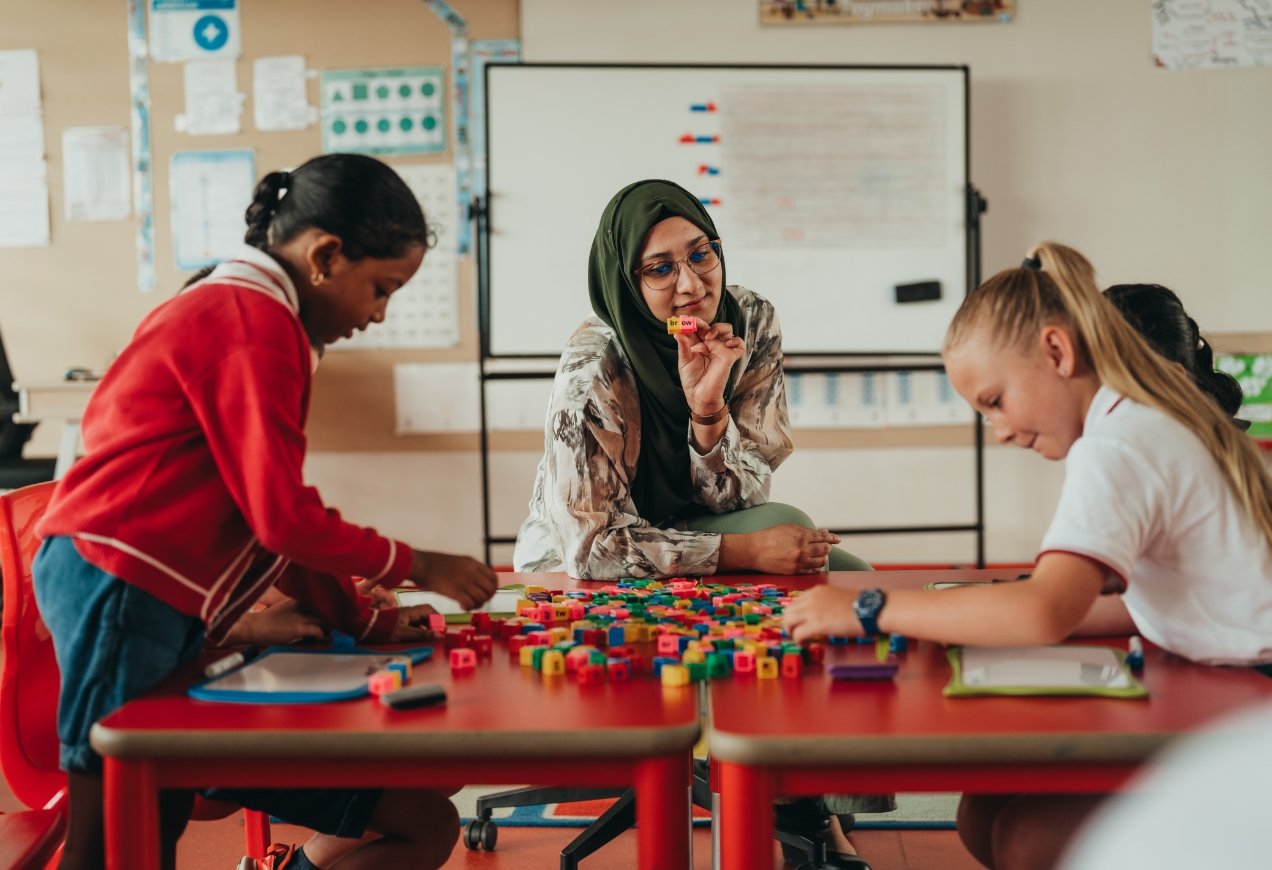
Children are given opportunities to make choices in their learning, explore their interests, and build on their strengths, while also developing areas that require more practice. Differentiation at Savannah is not about lowering expectations—it is about finding the right pathways for every learner to succeed.
Whether through adapted resources, guided small-group work, open-ended questions, or extension opportunities, we aim to make learning accessible, engaging, and meaningful for all. By embracing diversity in learning styles, abilities, and backgrounds, we create classrooms where every child feels valued, motivated, and confident to take on new challenges.
Learning Beyond the Classroom
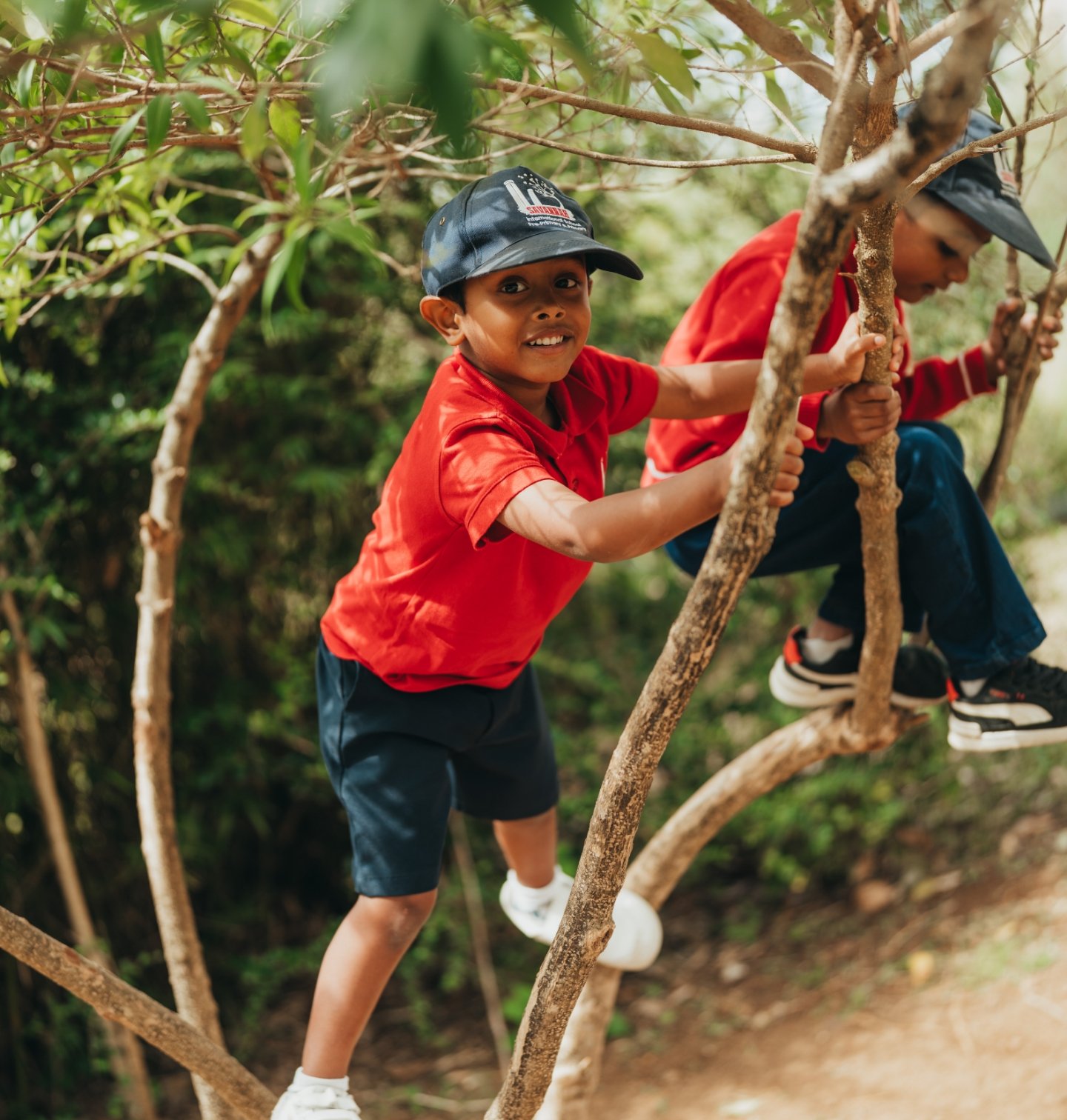
At Savannah International School, we believe some of the most powerful learning happens outside the classroom.
Each unit of learning is enriched with carefully planned trips that give children real world experiences and bring their studies to life.
For example, during a Year 2 unit on transport, students explored different systems by taking a bus to Curepipe, riding the Metro to Port Louis, and visiting the harbour. On average, children take part in up to six trips a year, all directly connected to what they are learning in class.
Safety is always our highest priority, with appropriate supervision and parent support when needed.